Enviar mi libro
Comuníquese directamente con nuestro equipo editorial para recibir orientación sobre evaluación, requisitos y publicación.
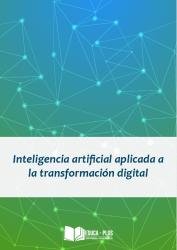
La inteligencia artificial se ha consolidado como una tecnología estratégica para la transformación digital de las organizaciones, al ampliar las posibilidades de automatización, análisis de información, innovación y apoyo a la toma de decisiones. En este contexto, la obra Inteligencia artificial aplicada a la transformación digital: Fundamentos, tecnologías, aplicaciones y estrategias para organizaciones inteligentes examina los fundamentos conceptuales, las principales tecnologías habilitadoras y las condiciones organizacionales necesarias para integrar sistemas inteligentes de manera responsable, eficiente y sostenible.
Estructurado en diez capítulos, el libro aborda la evolución de la inteligencia artificial y su convergencia con la transformación digital, diferenciando la incorporación de herramientas tecnológicas de los procesos integrales de cambio institucional. Analiza tecnologías como el aprendizaje automático, el aprendizaje profundo, el procesamiento del lenguaje natural, la visión por computadora, la inteligencia artificial generativa y la computación distribuida. Asimismo, estudia la importancia de la infraestructura digital, la calidad de los datos y la interoperabilidad para el desarrollo de soluciones tecnológicas confiables.
Desde una perspectiva estratégica e interdisciplinaria, examina la aplicación de la inteligencia artificial en la gestión de operaciones, las cadenas de suministro, las relaciones con los clientes, las finanzas y la administración del talento humano. También aborda la planificación de iniciativas digitales, el diagnóstico de capacidades institucionales, la innovación de procesos y la evaluación de resultados mediante indicadores pertinentes.
La publicación incorpora una reflexión transversal sobre gobernanza tecnológica, ética algorítmica, protección de datos, ciberseguridad, supervisión humana y sostenibilidad. Destaca que la adopción de inteligencia artificial no garantiza por sí misma mejoras organizacionales, sino que requiere liderazgo, competencias profesionales, evaluación continua y decisiones fundamentadas.
La obra está dirigida a estudiantes universitarios, docentes, investigadores, directivos y profesionales interesados en comprender las oportunidades, limitaciones y desafíos de la inteligencia artificial aplicada a la transformación digital. Su contribución consiste en proporcionar fundamentos académicos y criterios de aplicación para promover organizaciones inteligentes, capaces de integrar tecnología, conocimiento humano y responsabilidad institucional en procesos sostenibles de innovación y transformación.
Amershi, S., Weld, D., Vorvoreanu, M., Fourney, A., Nushi, B., Collisson, P., Suh, J., Iqbal, S., Bennett, P. N., Inkpen, K., Teevan, J., Kikin-Gil, R., & Horvitz, E. (2019). Guidelines for human-AI interaction. En Proceedings of the 2019 CHI Conference on Human Factors in Computing Systems (pp. 1–13). Association for Computing Machinery. https://doi.org/10.1145/3290605.3300233
Armbrust, M., Ghodsi, A., Xin, R., & Zaharia, M. (2021). Lakehouse: A new generation of open platforms that unify data warehousing and advanced analytics. En Proceedings of the 11th Conference on Innovative Data Systems Research. https://www.vldb.org/cidrdb/papers/2021/cidr2021_paper17.pdf
Ascarza, E. (2018). Retention futility: Targeting high-risk customers might be ineffective. Journal of Marketing Research, 55(1), 80–98. https://doi.org/10.1509/jmr.16.0163
Autor, D. H. (2015). Why are there still so many jobs? The history and future of workplace automation. Journal of Economic Perspectives, 29(3), 3–30. https://doi.org/10.1257/jep.29.3.3
Bertsimas, D., & Kallus, N. (2020). From predictive to prescriptive analytics. Management Science, 66(3), 1025–1044. https://doi.org/10.1287/mnsc.2018.3253
Bharadwaj, A., El Sawy, O. A., Pavlou, P. A., & Venkatraman, N. (2013). Digital business strategy: Toward a next generation of insights. MIS Quarterly, 37(2), 471–482. https://doi.org/10.25300/MISQ/2013/37:2.3
Bommasani, R., Hudson, D. A., Adeli, E., Altman, R., Arora, S., von Arx, S., Bernstein, M. S., Bohg, J., Bosselut, A., Brunskill, E., Brynjolfsson, E., Buch, S., Card, D., Castellon, R., Chatterji, N., Chen, A., Creel, K., Davis, J. Q., Demszky, D., … Liang, P. (2021). On the opportunities and risks of foundation models. arXiv. https://doi.org/10.48550/arXiv.2108.07258
Breck, E., Cai, S., Nielsen, E., Salib, M., & Sculley, D. (2017). The ML test score: A rubric for ML production readiness and technical debt reduction. En 2017 IEEE International Conference on Big Data (Big Data) (pp. 1123–1132). IEEE. https://doi.org/10.1109/BigData.2017.8258038
Brynjolfsson, E., Li, D., & Raymond, L. (2025). Generative AI at work. The Quarterly Journal of Economics, 140(2), 889–942. https://doi.org/10.1093/qje/qjae044
Brynjolfsson, E., Rock, D., & Syverson, C. (2021). The productivity J-curve: How intangibles complement general purpose technologies. American Economic Journal: Macroeconomics, 13(1), 333–372. https://doi.org/10.1257/mac.20180386
Carvalho, T. P., Soares, F. A. A. M. N., Vita, R., Francisco, R. da P., Basto, J. P., & Alcalá, S. G. S. (2019). A systematic literature review of machine learning methods applied to predictive maintenance. Computers & Industrial Engineering, 137, Artículo 106024. https://doi.org/10.1016/j.cie.2019.106024
Dal Pozzolo, A., Boracchi, G., Caelen, O., Alippi, C., & Bontempi, G. (2018). Credit card fraud detection: A realistic modeling and a novel learning strategy. IEEE Transactions on Neural Networks and Learning Systems, 29(8), 3784–3797. https://doi.org/10.1109/TNNLS.2017.2736643
DAMA International. (2017). DAMA-DMBOK: Data management body of knowledge (2.ª ed.). Technics Publications. https://technicspub.com/wp-content/uploads/2023/07/DAMA-DMBOK2.pdf
Edmondson, A. (1999). Psychological safety and learning behavior in work teams. Administrative Science Quarterly, 44(2), 350–383. https://doi.org/10.2307/2666999
Fagan, M., Megas, K. N., Scarfone, K., & Smith, M. (2020). IoT device cybersecurity capability core baseline (NISTIR 8259A). National Institute of Standards and Technology. https://doi.org/10.6028/NIST.IR.8259A
Financial Stability Board. (2024). The financial stability implications of artificial intelligence. https://www.fsb.org/2024/11/the-financial-stability-implications-of-artificial-intelligence/
Financial Stability Board. (2025). Monitoring adoption of artificial intelligence and related vulnerabilities in the financial sector. https://www.fsb.org/2025/10/monitoring-adoption-of-artificial-intelligence-and-related-vulnerabilities-in-the-financial-sector/
Gmyrek, P., Berg, J., Kamiński, K., Konopczyński, F., Ładna, A., Nafradi, B., Rosłaniec, K., & Troszyński, M. (2025). Generative AI and jobs: A refined global index of occupational exposure (ILO Working Paper 140). International Labour Organization. https://doi.org/10.54394/HETP0387
Goodfellow, I., Bengio, Y., & Courville, A. (2016). Deep learning. MIT Press. https://www.deeplearningbook.org/
Henderson, P., Hu, J., Romoff, J., Brunskill, E., Jurafsky, D., & Pineau, J. (2020). Towards the systematic reporting of the energy and carbon footprints of machine learning. Journal of Machine Learning Research, 21(248), 1–43. https://jmlr.org/papers/v21/20-312.html
Huang, M.-H., & Rust, R. T. (2021). A strategic framework for artificial intelligence in marketing. Journal of the Academy of Marketing Science, 49(1), 30–50. https://doi.org/10.1007/s11747-020-00749-9
Hyndman, R. J., & Athanasopoulos, G. (2021). Forecasting: Principles and practice (3.ª ed.). OTexts. https://otexts.com/fpp3/
International Energy Agency. (2025). Energy and AI. https://www.iea.org/reports/energy-and-ai
International Organization for Standardization & International Electrotechnical Commission. (2023). Information technology—Artificial intelligence—Management system (ISO/IEC 42001:2023). https://www.iso.org/standard/42001
Iorga, M., Feldman, L., Barton, R., Martin, M. J., Goren, N., & Mahmoudi, C. (2018). Fog computing conceptual model (NIST Special Publication 500-325). National Institute of Standards and Technology. https://doi.org/10.6028/NIST.SP.500-325
Jurafsky, D., & Martin, J. H. (2026). Speech and language processing: An introduction to natural language processing, computational linguistics, and speech recognition with language models (3.ª ed., manuscrito en línea del 19 de agosto de 2026). https://web.stanford.edu/~jurafsky/slp3/
Kane, G. C., Palmer, D., Phillips, A. N., Kiron, D., & Buckley, N. (2015). Strategy, not technology, drives digital transformation. MIT Sloan Management Review y Deloitte University Press. https://doi.org/10.63383/uzyq6766
Kellogg, K. C., Valentine, M. A., & Christin, A. (2020). Algorithms at work: The new contested terrain of control. Academy of Management Annals, 14(1), 366–410. https://doi.org/10.5465/annals.2018.0174
Kleinberg, J., Ludwig, J., Mullainathan, S., & Obermeyer, Z. (2015). Prediction policy problems. American Economic Review, 105(5), 491–495. https://doi.org/10.1257/aer.p20151023
Kotter, J. P. (1995). Leading change: Why transformation efforts fail. Harvard Business Review, 73(2), 59–67. https://hbr.org/1995/03/leading-change-why-transformation-efforts-fail-2
Kreuzberger, D., Kühl, N., & Hirschl, S. (2023). Machine learning operations (MLOps): Overview, definition, and architecture. IEEE Access, 11, 31866–31879. https://doi.org/10.1109/ACCESS.2023.3262138
LeCun, Y., Bengio, Y., & Hinton, G. (2015). Deep learning. Nature, 521(7553), 436–444. https://doi.org/10.1038/nature14539
Lee, H. L., Padmanabhan, V., & Whang, S. (1997). Information distortion in a supply chain: The bullwhip effect. Management Science, 43(4), 546–558. https://doi.org/10.1287/mnsc.43.4.546
Lei n.º 13.709, de 14 de agosto de 2018: Lei Geral de Proteção de Dados Pessoais. (2018). Diário Oficial da União. https://www.planalto.gov.br/ccivil_03/_ato2015-2018/2018/lei/l13709.htm
Lemon, K. N., & Verhoef, P. C. (2016). Understanding customer experience throughout the customer journey. Journal of Marketing, 80(6), 69–96. https://doi.org/10.1509/jm.15.0420
Lewis, P., Perez, E., Piktus, A., Petroni, F., Karpukhin, V., Goyal, N., Küttler, H., Lewis, M., Yih, W.-t., Rocktäschel, T., Riedel, S., & Kiela, D. (2020). Retrieval-augmented generation for knowledge-intensive NLP tasks. Advances in Neural Information Processing Systems, 33, 9459–9474. https://doi.org/10.48550/arXiv.2005.11401
Ley Orgánica de Protección de Datos Personales. (2021, 26 de mayo). Registro Oficial, Quinto Suplemento n.º 459. https://www.registroficial.gob.ec/quinto-suplemento-al-registro-oficial-no-459/
Martin, K. D., Borah, A., & Palmatier, R. W. (2017). Data privacy: Effects on customer and firm performance. Journal of Marketing, 81(1), 36–58. https://doi.org/10.1509/jm.15.0497
Matt, C., Hess, T., & Benlian, A. (2015). Digital transformation strategies. Business & Information Systems Engineering, 57(5), 339–343. https://doi.org/10.1007/s12599-015-0401-5
McCarthy, J., Minsky, M. L., Rochester, N., & Shannon, C. E. (1955, 31 de agosto). A proposal for the Dartmouth summer research project on artificial intelligence [Propuesta de investigación]. https://www-formal.stanford.edu/jmc/history/dartmouth/dartmouth.html
Mell, P., & Grance, T. (2011). The NIST definition of cloud computing (NIST Special Publication 800-145). National Institute of Standards and Technology. https://doi.org/10.6028/NIST.SP.800-145
National Institute of Standards and Technology. (2023). Artificial intelligence risk management framework (AI RMF 1.0) (NIST AI 100-1). https://doi.org/10.6028/NIST.AI.100-1
National Institute of Standards and Technology. (2024). The NIST cybersecurity framework (CSF) 2.0 (NIST CSWP 29). https://doi.org/10.6028/NIST.CSWP.29
Nissenbaum, H. (2004). Privacy as contextual integrity. Washington Law Review, 79(1), 119–158. https://digitalcommons.law.uw.edu/wlr/vol79/iss1/10/
Organización de las Naciones Unidas para la Educación, la Ciencia y la Cultura. (2021). Recomendación sobre la ética de la inteligencia artificial. https://www.unesco.org/en/legal-affairs/recommendation-ethics-artificial-intelligence
Organización Internacional del Trabajo. (2025, 20 de mayo). Uno de cada cuatro empleos en riesgo de transformarse por la IA generativa, revela nuevo índice global de la OIT y NASK. https://www.ilo.org/es/resource/noticias/uno-de-cada-cuatro-empleos-en-riesgo-de-transformarse-por-la-ia-generativa
Organización para la Cooperación y el Desarrollo Económicos. (2023a). OECD employment outlook 2023: Artificial intelligence and the labour market. OECD Publishing. https://doi.org/10.1787/08785bba-en
Organización para la Cooperación y el Desarrollo Económicos. (2023b). OECD guidelines for multinational enterprises on responsible business conduct. OECD Publishing. https://doi.org/10.1787/81f92357-en
Organización para la Cooperación y el Desarrollo Económicos. (2024). Revised recommendation of the Council on artificial intelligence (C/MIN[2024]16/FINAL). https://one.oecd.org/document/C/MIN%282024%2916/FINAL/en
Organización para la Cooperación y el Desarrollo Económicos. (2025). Strategic foresight toolkit for resilient public policy: A comprehensive foresight methodology to support sustainable and future-ready public policy. OECD Publishing. https://doi.org/10.1787/bcdd9304-en
Parasuraman, R., Sheridan, T. B., & Wickens, C. D. (2000). A model for types and levels of human interaction with automation. IEEE Transactions on Systems, Man, and Cybernetics—Part A: Systems and Humans, 30(3), 286–297. https://doi.org/10.1109/3468.844354
Parker, S. K., & Grote, G. (2022). Automation, algorithms, and beyond: Why work design matters more than ever in a digital world. Applied Psychology, 71(4), 1171–1204. https://doi.org/10.1111/apps.12241
Phillips, P. J., Hahn, C. A., Fontana, P. C., Yates, A. N., Greene, K. K., Broniatowski, D. A., & Przybocki, M. A. (2021). Four principles of explainable artificial intelligence (NISTIR 8312). National Institute of Standards and Technology. https://doi.org/10.6028/NIST.IR.8312
Porter, M. E. (1996). What is strategy? Harvard Business Review, 74(6), 61–78. https://hbr.org/1996/11/what-is-strategy
Raghavan, M., Barocas, S., Kleinberg, J., & Levy, K. (2020). Mitigating bias in algorithmic hiring: Evaluating claims and practices. En Proceedings of the 2020 Conference on Fairness, Accountability, and Transparency (pp. 469–481). Association for Computing Machinery. https://doi.org/10.1145/3351095.3372828
Raisch, S., & Krakowski, S. (2021). Artificial intelligence and management: The automation–augmentation paradox. Academy of Management Review, 46(1), 192–210. https://doi.org/10.5465/amr.2018.0072
Reglamento (UE) 2024/1689 del Parlamento Europeo y del Consejo, de 13 de junio de 2024, por el que se establecen normas armonizadas en materia de inteligencia artificial (Reglamento de Inteligencia Artificial). (2024). Diario Oficial de la Unión Europea, L, 2024/1689. https://eur-lex.europa.eu/eli/reg/2024/1689/oj
Ricci, F., Rokach, L., & Shapira, B. (Eds.). (2022). Recommender systems handbook (3.ª ed.). Springer. https://doi.org/10.1007/978-1-0716-2197-4
Russell, S., & Norvig, P. (2021). Artificial intelligence: A modern approach (4.ª ed., ed. global). Pearson. https://aima.cs.berkeley.edu/global-index.html
Schein, E. H., & Schein, P. A. (2017). Organizational culture and leadership (5.ª ed.). Wiley. https://www.wiley.com/en-ae/organizational-culture-and-leadership-5th-edition-p-9781119212041
Schluntz, E., & Zhang, B. (2024, 19 de diciembre). Building effective agents. Anthropic. https://www.anthropic.com/engineering/building-effective-agents
Schumacher, A., Erol, S., & Sihn, W. (2016). A maturity model for assessing Industry 4.0 readiness and maturity of manufacturing enterprises. Procedia CIRP, 52, 161–166. https://doi.org/10.1016/j.procir.2016.07.040
Sculley, D., Holt, G., Golovin, D., Davydov, E., Phillips, T., Ebner, D., Chaudhary, V., Young, M., Crespo, J.-F., & Dennison, D. (2015). Hidden technical debt in machine learning systems. Advances in Neural Information Processing Systems, 28, 2503–2511. https://research.google/pubs/hidden-technical-debt-in-machine-learning-systems/
Selbst, A. D., boyd, d., Friedler, S. A., Venkatasubramanian, S., & Vertesi, J. (2019). Fairness and abstraction in sociotechnical systems. En Proceedings of the Conference on Fairness, Accountability, and Transparency (pp. 59–68). Association for Computing Machinery. https://doi.org/10.1145/3287560.3287598
Shao, G. (2024). Manufacturing digital twin standards. En Proceedings of the ACM/IEEE 27th International Conference on Model Driven Engineering Languages and Systems (pp. 370–377). Association for Computing Machinery. https://doi.org/10.1145/3652620.3688250
Shmueli, G. (2010). To explain or to predict? Statistical Science, 25(3), 289–310. https://doi.org/10.1214/10-STS330
Suresh, H., & Guttag, J. (2021). A framework for understanding sources of harm throughout the machine learning life cycle. En Equity and Access in Algorithms, Mechanisms, and Optimization (pp. 1–9). Association for Computing Machinery. https://doi.org/10.1145/3465416.3483305
Szeliski, R. (2022). Computer vision: Algorithms and applications (2.ª ed.). Springer. https://doi.org/10.1007/978-3-030-34372-9
Teece, D. J. (2007). Explicating dynamic capabilities: The nature and microfoundations of (sustainable) enterprise performance. Strategic Management Journal, 28(13), 1319–1350. https://doi.org/10.1002/smj.640
Teece, D. J. (2010). Business models, business strategy and innovation. Long Range Planning, 43(2–3), 172–194. https://doi.org/10.1016/j.lrp.2009.07.003
Thomas, D. S. (2017). Investment analysis methods: A practitioner’s guide to understanding the basic principles for investment decisions in manufacturing (NIST Advanced Manufacturing Series 200-5). National Institute of Standards and Technology. https://doi.org/10.6028/NIST.AMS.200-5
Thomas, D. S. (2024). Economics of digital twins: Costs, benefits, and economic decision making (NIST Advanced Manufacturing Series 100-61). National Institute of Standards and Technology. https://doi.org/10.6028/NIST.AMS.100-61
Toorajipour, R., Sohrabpour, V., Nazarpour, A., Oghazi, P., & Fischl, M. (2021). Artificial intelligence in supply chain management: A systematic literature review. Journal of Business Research, 122, 502–517. https://doi.org/10.1016/j.jbusres.2020.09.009
Turing, A. M. (1950). Computing machinery and intelligence. Mind, 59(236), 433–460. https://doi.org/10.1093/mind/LIX.236.433
van der Aalst, W. M. P. (2016). Process mining: Data science in action (2.ª ed.). Springer. https://doi.org/10.1007/978-3-662-49851-4
van der Aalst, W. M. P., Bichler, M., & Heinzl, A. (2018). Robotic process automation. Business & Information Systems Engineering, 60(4), 269–272. https://doi.org/10.1007/s12599-018-0542-4
Vassilev, A., Oprea, A., Fordyce, A., Anderson, H., Davies, X., & Hamin, M. (2025). Adversarial machine learning: A taxonomy and terminology of attacks and mitigations (NIST AI 100-2e2025). National Institute of Standards and Technology. https://doi.org/10.6028/NIST.AI.100-2e2025
Vaswani, A., Shazeer, N., Parmar, N., Uszkoreit, J., Jones, L., Gomez, A. N., Kaiser, Ł., & Polosukhin, I. (2017). Attention is all you need. Advances in Neural Information Processing Systems, 30, 5998–6008. https://doi.org/10.48550/arXiv.1706.03762
Vial, G. (2019). Understanding digital transformation: A review and a research agenda. The Journal of Strategic Information Systems, 28(2), 118–144. https://doi.org/10.1016/j.jsis.2019.01.003
Vinuesa, R., Azizpour, H., Leite, I., Balaam, M., Dignum, V., Domisch, S., Felländer, A., Langhans, S. D., Tegmark, M., & Fuso Nerini, F. (2020). The role of artificial intelligence in achieving the Sustainable Development Goals. Nature Communications, 11, Artículo 233. https://doi.org/10.1038/s41467-019-14108-y
Wang, R. Y., & Strong, D. M. (1996). Beyond accuracy: What data quality means to data consumers. Journal of Management Information Systems, 12(4), 5–33. https://doi.org/10.1080/07421222.1996.11518099
Wedel, M., & Kannan, P. K. (2016). Marketing analytics for data-rich environments. Journal of Marketing, 80(6), 97–121. https://doi.org/10.1509/jm.15.0413
Wilkinson, M. D., Dumontier, M., Aalbersberg, I. J., Appleton, G., Axton, M., Baak, A., Blomberg, N., Boiten, J.-W., da Silva Santos, L. B., Bourne, P. E., Bouwman, J., Brookes, A. J., Clark, T., Crosas, M., Dillo, I., Dumon, O., Edmunds, S., Evelo, C. T., Finkers, R., … Mons, B. (2016). The FAIR guiding principles for scientific data management and stewardship. Scientific Data, 3, Artículo 160018. https://doi.org/10.1038/sdata.2016.18
World Wide Web Consortium. (2017). Data on the web best practices [Recomendación del W3C]. https://www.w3.org/TR/2017/REC-dwbp-20170131/

Esta obra está bajo una licencia internacional Creative Commons Atribución-NoComercial-CompartirIgual 4.0.
Política de Derechos de Autor y Licencia de Publicación
Los autores conservan la titularidad de los derechos de autor de sus obras. EDUCA-PLUS Editorial Académica ejerce únicamente los derechos de edición, publicación, distribución, preservación y difusión concedidos mediante el acuerdo editorial o la autorización correspondiente, sin transferencia de la titularidad.
Licencia de uso
Las obras cuya publicación haya sido autorizada bajo Creative Commons Atribución-NoComercial-CompartirIgual 4.0 Internacional (CC BY-NC-SA 4.0) pueden copiarse, compartirse y adaptarse, siempre que se cumplan estas condiciones:
• Atribución: reconocer adecuadamente a los autores y la fuente, proporcionar un enlace a la licencia e indicar si se realizaron cambios, sin sugerir respaldo de los autores o de la editorial.
• NoComercial: no utilizar el material con fines comerciales al amparo de esta licencia.
• CompartirIgual: cuando se distribuyan adaptaciones, hacerlo bajo la misma licencia o una licencia compatible reconocida por Creative Commons.
No se pueden imponer restricciones legales ni medidas tecnológicas que impidan los usos permitidos por la licencia.
Texto de la licencia:
https://creativecommons.org/licenses/by-nc-sa/4.0/
Publicaciones anteriores y condiciones particulares
La licencia aplicable a cada obra es la que figure en su ficha y en el archivo publicado, conforme a los derechos efectivamente autorizados. Esta política no sustituye automáticamente las licencias históricas ni amplía los derechos concedidos por sus titulares.
Cuando existan períodos con condiciones diferentes, se publicarán sus fechas de vigencia y se identificará la licencia correspondiente a cada obra. Cualquier modificación que requiera nuevos permisos se realizará después de obtener y documentar las autorizaciones necesarias.
Los materiales de terceros expresamente identificados pueden estar sujetos a condiciones diferentes. Los usos que excedan la licencia requieren autorización del titular correspondiente, salvo las excepciones y limitaciones legalmente aplicables.
Comuníquese directamente con nuestro equipo editorial para recibir orientación sobre evaluación, requisitos y publicación.